
The Delta Force’s Unraveling Operation
Deception PointThis flow follows Delta-One’s mission from disciplined surveillance to escalating violence and eventual failure against witnesses who repeatedly adapt.
increasing Bearing strength in each event
 decreasing
Bearing strength in each eventdecreasingMission Discipline
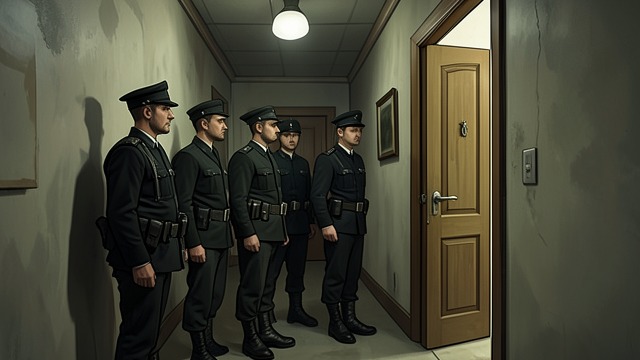
Mission Discipline
Watching, not acting
Delta-One leads a small team stationed near the NASA camp. They use covert surveillance technology to observe activity inside the habisphere and report developments to an unseen controller.
The soldiers understand their work as a secret mission governed by orders, not public law or ordinary accountability.
A narrow operational frame
Delta-One avoids questioning the purpose of assignments and trusts the controller’s authority. That discipline makes the team effective, but it also leaves little room for moral judgment when the orders change.
The mission begins as observation and will become increasingly violent as the deception is threatened.
The First Intervention
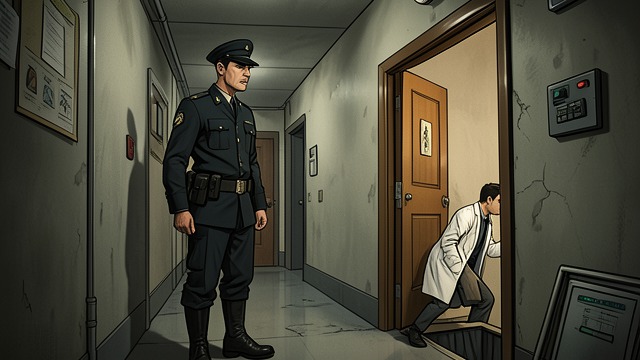
The First Intervention
A witness becomes a threat
When Wailee Ming tries to collect water from the pit, Delta-One recognizes that the scientist may discover the anomaly. He directs an improvised attack that causes Ming to fall into the shaft.
The operation’s first direct intervention is disguised as an accident, preserving the appearance that the scientists are simply working in a hazardous environment.
The logic of concealment
Delta-One’s response treats the risk of exposure as more important than the scientist’s life. The mission has already crossed from observation into murder.
That transition makes each later use of force easier to justify within the team’s narrow operational logic.
Violence on the Ice
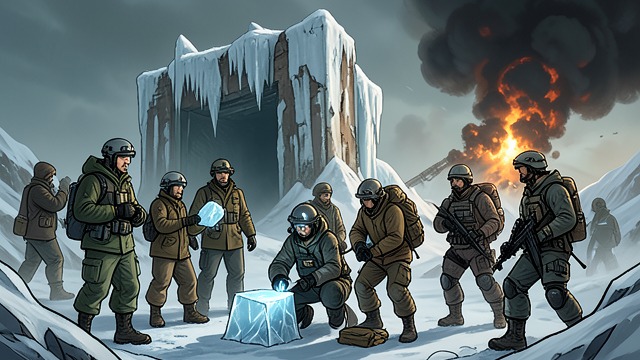
Violence on the Ice
The evidence triggers an attack
The scientists’ discovery of the insertion shaft threatens the secrecy of the mission. Delta-One leads the assault with improvised ice ammunition, expecting the team to die in conditions that will explain away their disappearance.
Norah and Corky are struck, while Rachel and Tolland use the equipment sled for cover.
The quarry escapes
Tolland turns a weather balloon into an improvised sail, pulling three survivors out of the attack. The team’s assumption that the environment will finish the job proves wrong.
Delta-One now faces a more complicated mission because witnesses have escaped and the story has spread beyond the camp.
The Offshore Pursuit
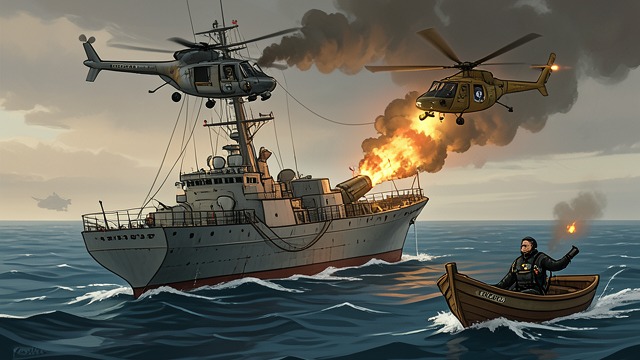
The Offshore Pursuit
A new target location
The survivors stop at the Goya to test the meteorite. Delta-One’s team uses electronic jamming and a gunship attack to prevent communication and destroy the Coast Guard helicopter.
The operation’s scope expands from an Arctic ambush to an assault on a civilian research ship and rescue crew.
Control slips away
Tolland uses the Goya’s equipment to capture two soldiers, and Corky draws fire away in a boat. The tactics that once gave Delta-One an advantage become liabilities as the survivors exploit the ship’s design and the currents.
The mission is no longer a clean, controlled operation; every attack adds uncertainty and witnesses.
Failure at the End
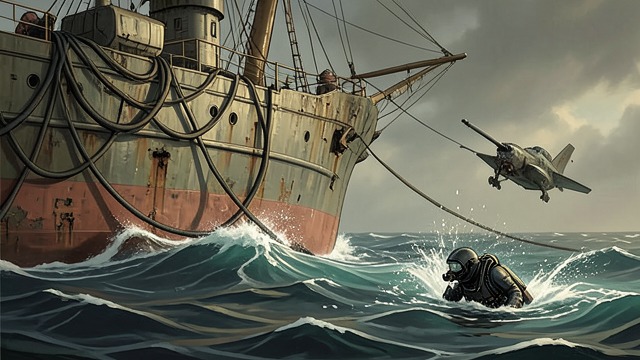
Failure at the End
The controller arrives
Pickering comes aboard the Goya and the hidden command structure is revealed. Delta-One receives the order to finish the operation while the ship is already damaged and unstable.
Rachel and Tolland use the Triton, the trapdoor, and the ship’s controls to resist. Delta-One’s gunship collides with the submersible cable and falls into the sea.
The mission destroys itself
The attack contributes to the Goya’s collapse and triggers the chain leading to the deep-sea eruption. The team’s effort to prevent disclosure ends in catastrophic failure.
Delta-One’s tactical discipline cannot compensate for a mission built on false assumptions, escalating violence, and the belief that every witness can be erased.
Ten days before the announcement
After Ming approaches the extraction pit
Night after Norah’s radar scan
After midnight aboard the Goya
Near dawn during the final confrontation
